
Poisoned Water?
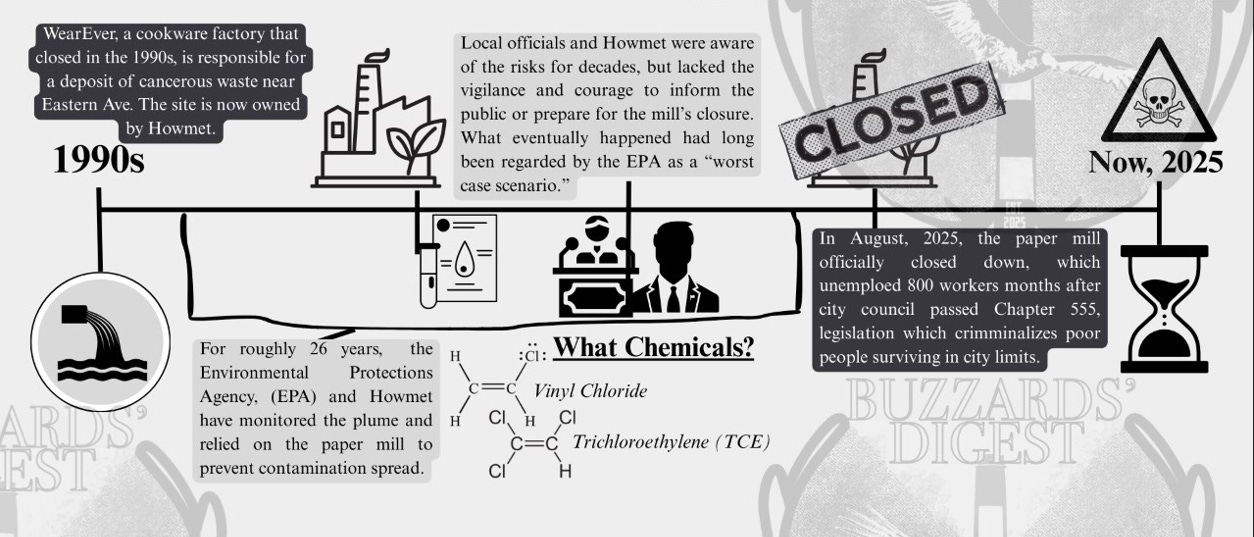
A decades’ old toxic plume in Chillicothe, Ohio has festered without scrutiny from public officials for roughly 26 years. Here is the information you need to stay up-to-date.

Where are we now?
The toxic plume, containing chemicals such as TCE and vinyl chloride at levels far above federal safety limits, had long been held in check by pumping from the Pixelle paper mill. With the mill now closed, that containment is gone, and the plume could continue to spread toward the Scioto River, farmland, and residential soils. The Ohio EPA has directed Howmet to model the effects of the pump shutdown and install new monitoring wells. Howmet has responded by placing two new wells and promising enhanced monitoring and analysis. Yet, for decades this contamination has lingered with little public discussion, only surfacing again as the mill’s closure forced the issue. After years of delay and minimization, should citizens simply accept reassurances? Or is it time to demand clear answers and more concrete action?
Is the Plume an Immediate threat?
The plume has not yet been declared an immediate threat, but projections show it could continue to move and eventually contaminate the Scioto River, nearby soils, and farmland. The EPA has noted the risks, yet the full scope remains unclear. This uncertainty is exactly why citizens must remain vigilant and continue pressing local government and Howmet for transparency and accountability. Our community deserves clear answers, honest communication, and concrete actions that ensure public safety and well-being. Reassurances alone are not sufficient.
Mayor Luke Feeney has said the city must hold Howmet’s “feet to the fire” to ensure they follow through on their plans and take responsibility for the environmental impact. Despite the public raising concerns at three separate meetings, the president of council and council representatives have remained silent.
What are the solutions?
Immediate Containment and Monitoring:
Install more monitoring wells and conduct frequent testing to track the plume’s movement in real time.
Active Remediation:
Use proven methods like pump-and-treat, chemical oxidation, or bioremediation to reduce levels of TCE and vinyl chloride.
Transparency and Public Accountability:
Require Howmet and the EPA to hold public meetings, release monitoring data, and allow third-party oversight.
Long-Term Safeguards:
Protect farmland and residential areas with land-use restrictions, water safety measures, and contingency plans.
Political Will and Enforcement:
Demand that local and state leaders back up promises with formal resolutions, oversight hearings, and, if necessary, legal action.
The Environmental Protection Agency (EPA) sets the rules that keep our water, air, and land safe from dangerous pollution. In Ohio, the Ohio EPA is usually in charge of enforcing those rules, making companies test for problems and clean them up when contamination is found. If a company ignores the rules, the EPA can fine them, force cleanup, or even take them to court.
Howmet Aerospace is a large, U.S.-based company specializing in engineered metal products like jet engine parts, fasteners, titanium structures for aircraft, and forged aluminum wheels. This plant sits on the site of the former Wear‑Ever cookware factory, the site implicated in the toxic plume issue, which means Howmet now owns the property where the historic contamination originated. That ownership is why they are now held responsible by the Ohio EPA for monitoring and responding to environmental concerns related to the plume
Do you have important information you would like to share? Contact us through this Google Form: Contact Buzzards’ Digest
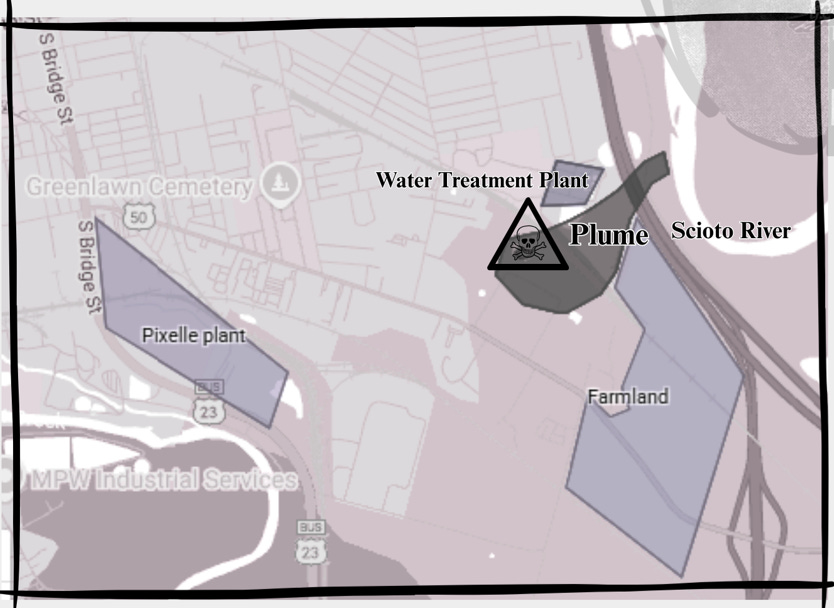
The ownership angle is crucial here since Howmet inherited the Wear-Ever site contamination. They can't just rely on monitoring wells and promises when TCE and vinyl chloride are above federal safety limits. The pump shutdown at Pixelle removes the only thing keeping this plume from spredding toward the Scioto River and farmland. It's time for active remediaton methods like pump-and-treat or chemical oxidation, not just more testing.